Areas of engineering capability, not project case studies.
Rather than describing specific completed projects — much of which relates to current employer work and isn't Taynium's to publish — this page outlines the kinds of problems and disciplines that experience applies to.
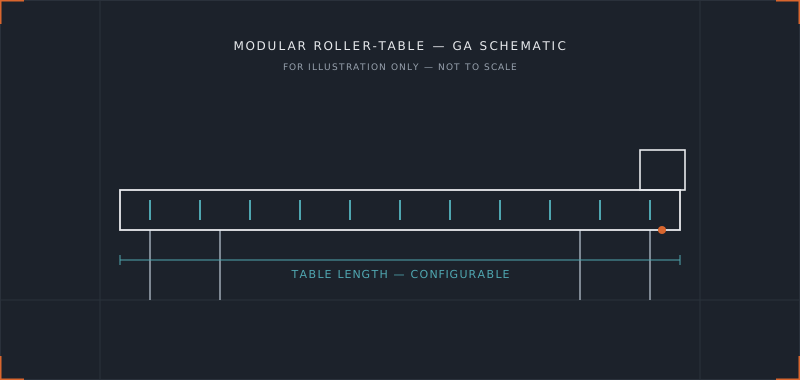
Machinery Design & Redesign
Concept and detail design work across mechanical machinery — geometry, mechanisms, guarding and manufacturability — informed by having built, wired and serviced machinery, not just modelled it.
SOLIDWORKS Automation & Software
Task Pane applications, macros and add-ins that automate repetitive CAD and drawing-issue work, built around a specific design office's own standards rather than a generic workflow.
Drawing, DXF & Revision Control
Making sure flat-pattern exports, profile numbers and production properties are always driven from the correct model configuration and revision — a common, easily overlooked source of production errors.
Product Configuration
Rules-based configurators that turn customer-facing options into correct part numbers, DXF references and manufacturing data automatically.
Investigation & Technical Assessment
Structured investigation into machinery faults, vibration, wear, tolerance or load issues, separating design, fabrication and assembly causes. Safety-critical structural certification is referred to appropriately qualified specialists.
Manufacturing Process & Equipment
Assessing and integrating manufacturing equipment and processes — cutting technology, tolerancing, production workflow — into existing engineering practice.
Have a similar problem?
Describe the current process and what a better outcome would look like.